At 42MM Architecture, geometry is not merely a design language: it’s a medium through
which collaboration finds both physical and visual expression. Every line, form, and
proportion is conceived to encourage dialogue between people, spaces, and the architecture
itself.
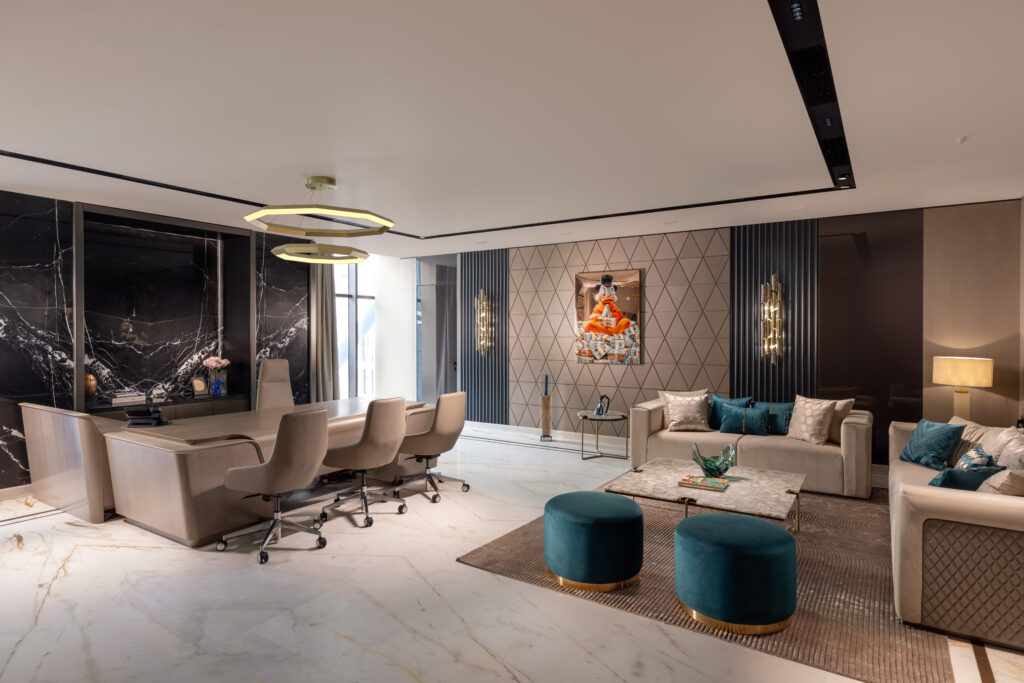
Geometry as a Framework for Physical Collaboration
In the built form, geometry becomes a catalyst for interaction. Transitional volumes are
designed not just as connective elements, but as active zones of exchange. Receding the
building backwards creates stepped terraces that act as host spaces for social interaction.
Meetings are not just confined to conference tables; they extend over coffee and lounge.
Every intersection, joint, and edge is resolved to maintain spatial continuity while reinforcing
the rhythm of the built envelope.
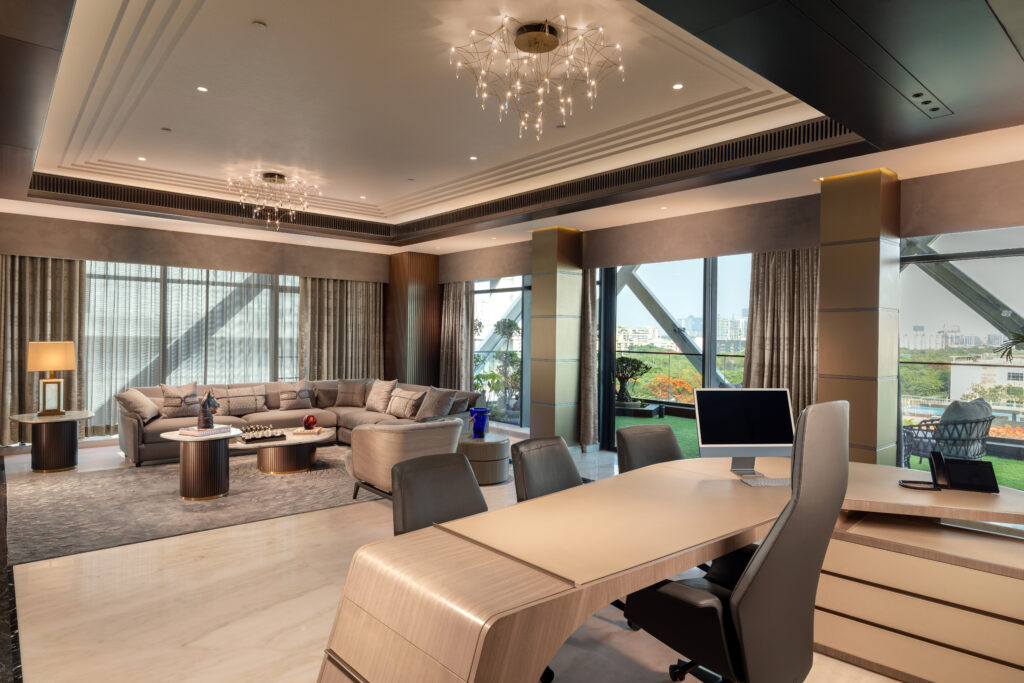
What begins as spatial organization evolves into a visual framework; where proportion,
alignment, and transparency guide perception as much as they guide movement.
Geometry as a Language of Visual Collaboration
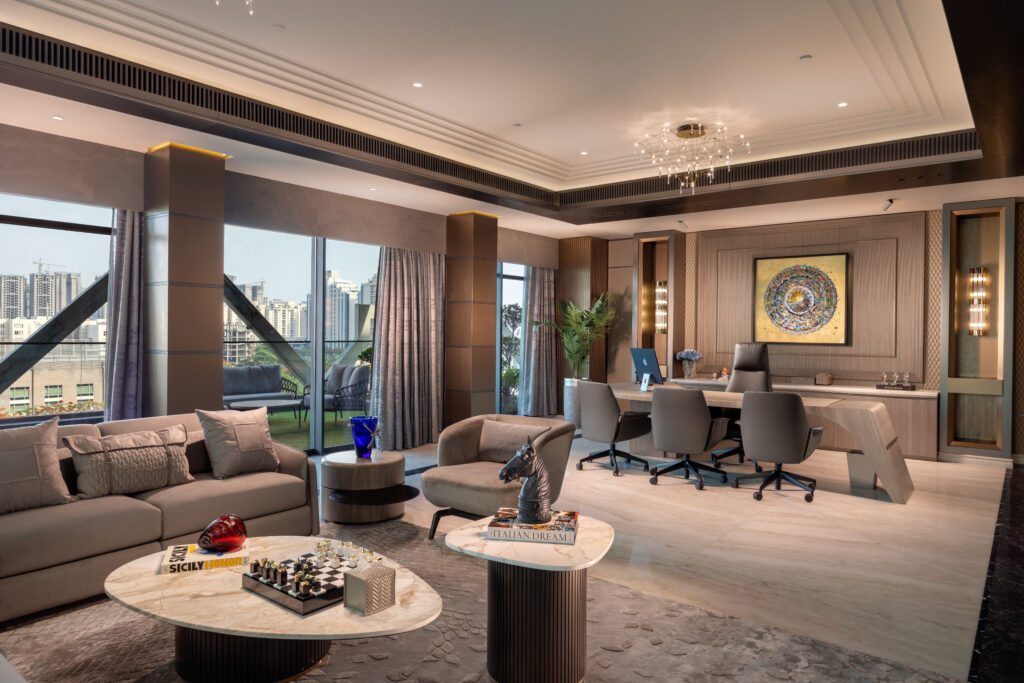
Visually, geometry defines how spaces communicate with one another. Layered planes,
intersecting volumes, and transparent partitions create sightlines that foster openness while
maintaining clarity of function. Atrium’s double heights create a volume that visually
connects multiple spaces together. It is more about a collective presence rather than an
individual dialogue. A visual connect that connects you to a larger community.
It enables a visual and physical coherence that transforms the work environment into a
network of connected experiences; where collaboration is both facilitated and spatially
inscribed.
Geometry here is not ornamental – it is the structural and perceptual foundation of interaction.
The resultant architecture is one of balance between openness and definition, between visual
clarity and physical engagement; where geometry becomes the enduring medium of
collective work, dialogue, and design expression.